
Building codes aren’t something most homeowners think about until they’re planning a renovation, replacing a roof, or applying for a permit. That’s usually when the questions start. Does my project need approval? Which rules apply? What happens if work doesn’t meet code requirements? The Virginia Uniform Statewide Building Code (VUSBC) exists to answer those questions!
It establishes minimum construction standards designed to protect public safety, health, and property throughout the Commonwealth. Whether you’re building a new home, remodeling an existing structure, or making major repairs, the VUSBC often plays a role in determining how the work must be completed.
Many property owners assume building codes only affect contractors or large commercial projects. In reality, homeowners can face delays, failed inspections, unexpected expenses, and permit issues when projects don’t comply with applicable requirements.
This guide explains the Virginia Uniform Statewide Building Code in plain language. You’ll learn what the code is, why it exists, which buildings must comply, how it relates to zoning regulations, and what homeowners should know before starting construction or renovation projects in Virginia.
What is the Virginia Uniform Statewide Building Code (USBC)?
The Virginia Uniform Statewide Building Code (USBC), often called the VUSBC, is the set of construction regulations that govern building projects throughout Virginia. The code establishes the minimum standards that must be followed when constructing, renovating, repairing, or maintaining buildings and structures within the Commonwealth.
According to Virginia’s Department of Housing and Community Development (DHCD):
“The Virginia Uniform Statewide Building Code (USBC) contains the building regulations that must be complied with when constructing a new building, structure, or an addition to an existing building.”
The USBC also applies to many repair, renovation, maintenance, and change-of-use projects involving existing buildings. The code is based largely on nationally recognized model building codes, with amendments tailored to Virginia’s specific needs and regulations.
For homeowners, the USBC affects many common projects, including:
- Roof replacements
- Home additions
- Structural repairs
- Deck construction
- Window and door replacements
- Electrical and plumbing work
- Major remodeling projects
What is the purpose of the USBC?
The primary purpose of the USBC is public safety.
Virginia law states:
“The purpose of the USBC is to protect the health, safety, and welfare of the residents of the Commonwealth of Virginia…”
The code establishes minimum requirements for:
- Structural integrity
- Fire safety
- Electrical systems
- Plumbing systems
- Mechanical systems
- Energy efficiency
- Accessibility
- Water conservation
An important point for property owners is that the USBC is intended to create consistent standards across Virginia. Rather than having every city or county create entirely different building requirements, the state provides a uniform framework that local building departments enforce.
For homeowners, compliance helps ensure that construction projects are safe, durable, and capable of passing inspections when permits are required.
What buildings must comply with the USBC?
The short answer is: almost all buildings and structures in Virginia are subject to some portion of the USBC.
The code applies to:
- New residential construction
- Existing homes undergoing major renovations
- Commercial buildings
- Additions and expansions
- Structural repairs
- Certain maintenance activities
- Changes in building occupancy or use
Virginia regulations state that the USBC prescribes requirements that must be followed in the “construction and rehabilitation of buildings and structures.”
That doesn’t mean every minor repair requires permits or inspections. Simple maintenance tasks may have different requirements than major construction projects. However, once work involves structural components, electrical systems, plumbing systems, roofing assemblies, or significant alterations, code compliance often becomes part of the process.
Is the USBC mandatory statewide?
Yes. The VUSBC is mandatory throughout the Commonwealth of Virginia.
According to the DHCD:
“The provisions of the USBC shall be applicable throughout the Commonwealth of Virginia.”
While the code itself is statewide, enforcement occurs at the local level. Cities, counties, and towns are responsible for administering permits, conducting inspections, and ensuring projects comply with applicable code requirements.
This means a homeowner in Virginia Beach, Richmond, Lynchburg, or Fairfax is subject to the same statewide building code framework, even though permit procedures and administrative processes may vary by locality.
For property owners, the practical takeaway is simple: if a project requires permits, it will generally need to comply with the applicable portions of the USBC regardless of where it is located in Virginia.
How does zoning interact with the USBC?
Many homeowners mistakenly assume zoning regulations and building codes are the same thing. In reality, they serve different purposes.
The USBC focuses on how something is built.
Zoning regulations focus on where and what can be built.
For example:
| Zoning Regulations | USBC Requirements |
| Property setbacks | Structural requirements |
| Building height limits | Fire safety standards |
| Lot coverage limits | Electrical standards |
| Land use restrictions | Plumbing requirements |
| Density requirements | Energy efficiency requirements |
A project may satisfy the USBC but still violate local zoning regulations. Likewise, a project may meet zoning requirements but fail to comply with applicable building codes.
Suppose a homeowner wants to build a detached garage. Local zoning rules may determine where the garage can be placed on the property and how large it can be. The USBC then governs how the structure must be constructed to meet safety standards.
Because both sets of regulations often apply simultaneously, homeowners should verify zoning requirements before applying for building permits.
Does roof replacement need to meet USBC standards?
In most cases, yes.
Roof replacement projects in Virginia are generally required to comply with applicable sections of the Virginia Uniform Statewide Building Code.
The exact requirements depend on the scope of work, but code provisions commonly address:
- Roof covering materials
- Underlayment installation
- Flashing requirements
- Fastener specifications
- Wind resistance standards
- Roof ventilation
- Structural considerations
Virginia adopts building standards largely based on the International Residential Code (IRC), which includes specific requirements for roofing systems.
For homeowners, this means a roof replacement is not simply a matter of installing new shingles. The entire roofing assembly may need to meet current code requirements, particularly if substantial portions of the roof are being replaced.
Proper permitting and inspections can help verify that:
- Materials are installed correctly
- Flashing protects vulnerable areas
- Ventilation meets code requirements
- Wind-resistance standards are satisfied
- Structural issues are identified before installation
This is particularly important in coastal regions such as Virginia Beach, where roofing systems may be subject to higher wind loads and more demanding weather conditions.
Before starting a roof replacement project, homeowners should consult their local building department or work with a qualified roofing contractor familiar with Virginia code requirements.
What penalties exist for USBC violations?
Failing to comply with the Virginia Uniform Statewide Building Code can lead to more than a failed inspection. Depending on the nature of the violation, property owners and contractors may face project delays, additional costs, and legal consequences.
According to Virginia regulations, local building officials have the authority to issue notices of violation and require corrective action when work does not comply with the USBC.
Potential consequences include:
- Failed inspections
- Stop-work orders
- Permit delays
- Required removal or correction of non-compliant work
- Additional permit and inspection fees
- Legal enforcement actions in certain cases
Virginia’s administrative code states:
“Any person violating any provision of the USBC shall be considered in violation of the law.”
In practice, most violations are resolved by correcting the issue and obtaining approval from the local building department. The longer a violation remains unresolved, the more expensive and disruptive the correction process can become.
For homeowners, the easiest way to avoid these problems is to secure permits when required and work with qualified contractors who understand Virginia code requirements.
How do I check if a project is USBC-compliant?
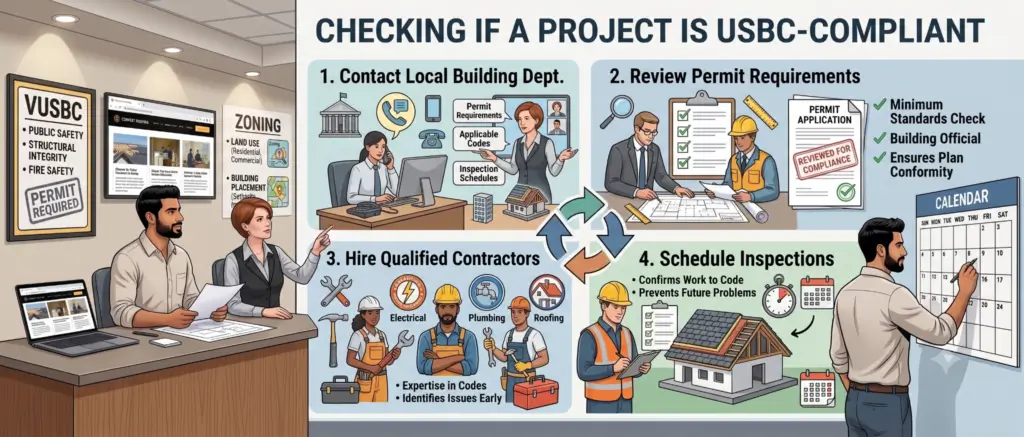
The best time to verify code compliance is before construction begins.
Many homeowners discover potential code issues only after an inspection fails or a project is nearly complete. A little preparation can help prevent expensive corrections later.
Following several ways to verify compliance!
Contact Your Local Building Department
Your city or county building department can explain:
- Permit requirements
- Applicable code provisions
- Inspection schedules
- Project-specific requirements
Most localities provide this information online or by phone.
Review Permit Requirements
Projects that require permits are typically reviewed for code compliance before construction begins.
Obtaining the proper permits helps ensure:
- Plans meet minimum standards
- Required inspections occur
- Construction follows applicable regulations
Hire Qualified Contractors
Experienced contractors often understand the code requirements associated with their trade and can help identify compliance issues before work starts.
This is particularly important for roofing, structural, electrical, plumbing, and mechanical projects.
Schedule Required Inspections
Inspections are designed to confirm that work complies with the approved plans and applicable code provisions.
Skipping inspections can create problems when selling a property, filing insurance claims, or pursuing future renovations.
If you live in Virginia Beach and are planning a roofing project, addition, or major renovation, checking permit requirements and inspection procedures before construction begins can save significant time and expense.
Avoid Costly Mistakes
The Virginia Uniform Statewide Building Code exists to create consistent construction standards that protect property owners, occupants, and communities throughout the Commonwealth. While building codes can seem complicated at first, understanding the basics can help homeowners avoid delays, failed inspections, and expensive corrections.
In this guide, we covered what the USBC is, why it exists, which buildings must comply, how it interacts with local zoning regulations, and what homeowners should know about roofing projects and code requirements. We also reviewed the potential consequences of violations and practical steps for verifying compliance before construction begins.
Whether you’re replacing a roof, building an addition, or planning a major renovation, code compliance is often much easier and less expensive to address before work starts than after problems are discovered.
For homeowners, the smartest approach is to verify permit requirements early, work with qualified professionals, and maintain open communication with local building officials throughout the project.
If you have additional questions about roofing requirements, permits, inspections, or common homeowner concerns, visit our FAQ page!
A little preparation before construction begins can help prevent costly surprises after the work is underway.