
A roof is easy to ignore when everything seems fine. No leaks, no missing shingles from the ground, no visible damage. For many homeowners, that is where the problem starts.
Roof maintenance rarely feels urgent. It competes with more visible upgrades like kitchens, flooring, or landscaping. It also sits in a category most homeowners do not fully understand. Terms like flashing, underlayment, or ventilation are not part of everyday decisions, which makes it harder to judge when something needs attention.
That gap often leads to small delays. A skipped inspection. Gutters are left clogged after a storm. A minor stain on the ceiling that does not seem worth investigating yet. Individually, these choices feel harmless. Over time, they tend to stack up.
This article looks at what happens when routine roof care is pushed aside. You will see what maintenance actually involves, how often it should be done, and how it impacts the lifespan of a residential roof by a roofing specialist’s point of view. Along the way, we will walk through real homeowner scenarios where inaction led to avoidable costs, and what could have been done differently.
By the end, you will have a clearer sense of how to approach roof maintenance in a way that protects both your home and your budget.
What kind of maintenance does a roof need?
“A roof does not fail all at once. It wears down in parts, usually in areas that are easy to miss from the ground.” – Says Chad Wilkins, Entrepreneur at the roofing market.
That is why residential roof maintenance focuses on small, routine checks that prevent larger structural problems.
Most roofs, whether asphalt shingles, metal, or tile, rely on the same core components. Shingles or panels shed water, flashing seals transitions and edges, underlayment adds a secondary barrier, and ventilation regulates temperature and moisture in the attic. Maintenance is about keeping all of these working together.
In practical terms, that includes:
- Visual inspections from the ground and, when safe, closer up
- Debris removal, especially leaves and branches that trap moisture
- Gutter cleaning to ensure proper drainage away from the roofline
- Flashing checks around chimneys, vents, and skylights
- Sealant touch-ups where minor cracks or gaps begin to form
- Shingle or tile review for signs of curling, cracking, or displacement
Each of these tasks targets a specific risk. Clogged gutters can push water under the first row of shingles. Damaged flashing can allow slow leaks that go unnoticed for months. Poor ventilation can shorten the life of roofing materials from the inside out.
Homeowners who stay consistent with these basics tend to avoid sudden repair costs and extend the overall life of their roof.
What is regular maintenance on a roof?
Regular maintenance follows a predictable rhythm rather than a one-time fix. Most properties benefit from a twice-a-year inspection, typically in spring and fall, along with additional checks after major storms.
A standard roof maintenance checklist usually covers:
- Looking for missing or damaged shingles
- Checking for granule loss in gutters (a sign of aging shingles)
- Inspecting flashing and sealants for early wear
- Clearing gutters and downspouts
- Watching for signs of moisture inside the attic, such as stains or musty odors
- Confirming that ventilation openings are not blocked
Some homeowners handle basic tasks themselves, especially cleaning and visual checks. Others prefer working with a roof maintenance company that can spot less obvious issues, such as early-stage leaks or structural movement.
According to Mr. Wilkins, the key is consistency:
“Skipping one season might not cause immediate damage, but repeated delays increase the likelihood of hidden problems turning into repairs. Over time, that directly impacts roof maintenance cost, often making it higher than it needs to be.”
What is the life expectancy of a roof?
Roof lifespan depends on materials, installation quality, climate, and how well the system is maintained over time. Two homes in the same neighborhood can have very different outcomes based on upkeep alone.
Here is a general range for common roofing materials:
- Asphalt shingles: 20 to 30 years
- Architectural shingles: 25 to 35 years
- Metal roofing: 40 to 70 years
- Clay or concrete tile: 50+ years
These numbers assume consistent residential roof maintenance. Without it, the lower end of each range becomes more realistic.
The reason is straightforward. Roofing materials break down faster when exposed to standing water, trapped debris, poor ventilation, or small leaks that go unresolved. For example, a clogged gutter can keep water sitting along the roof edge. Over time, that moisture can work its way under shingles and into the decking.
Homeowners often think the lifespan is fixed once the roof is installed. In reality, maintenance plays a direct role in how close your roof gets to its expected service life.
Stories of homeowners who didn’t do
Missed maintenance rarely feels like a decision at the time. It usually shows up as a delay, a small issue pushed to next season. These examples reflect how those choices can unfold.
A lifted shingle that didn’t look urgent
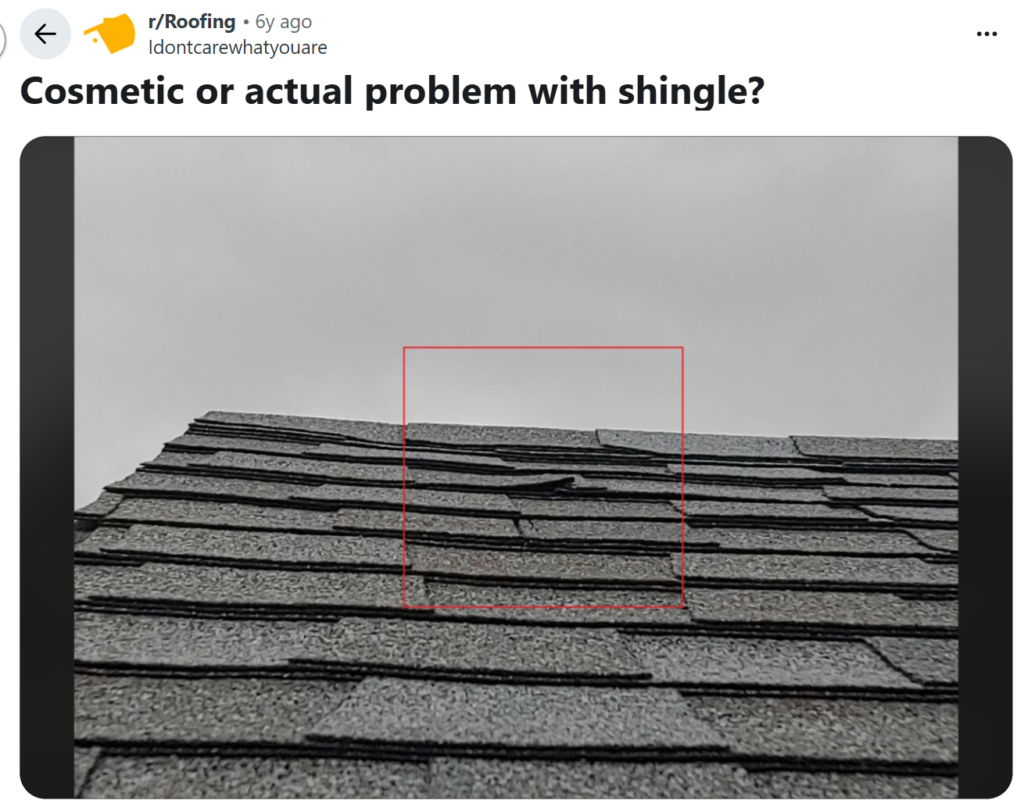
This Reddit user noticed a section of shingles lifting slightly and asked whether it was just cosmetic or an actual problem. From the ground, it looked minor. No visible leaks, no missing pieces, just a subtle distortion in one area.
That kind of change usually points to one of a few underlying issues:
- Wind lift that has broken the seal between shingles
- Early-stage curling or warping from heat and aging
- Improper fastening or slight movement in the decking below
Even when the surface looks intact, lifted shingles create a gap where wind-driven rain can get underneath. Once water passes the top layer, it can reach the underlayment and, over time, the roof decking.
We asked our expert about this issue, and this was his answer:
“What makes this scenario a risk is the timing. At this stage, the fix is often simple. A targeted repair, resealing, or replacing a few shingles may be enough. Left alone, that same area can expand, especially after storms or seasonal temperature swings.”
This is a common pattern in residential roof maintenance. The issue does not look urgent, so it gets postponed. Months later, the repair involves more than just the visible section.
In cases like this, a quick inspection from a roof maintenance company would clarify whether the problem is cosmetic or functional. Most of the time, subtle lifting is not just visual. It is an early sign that the roof is starting to lose its ability to fully shed water.
When flashing crosses the line
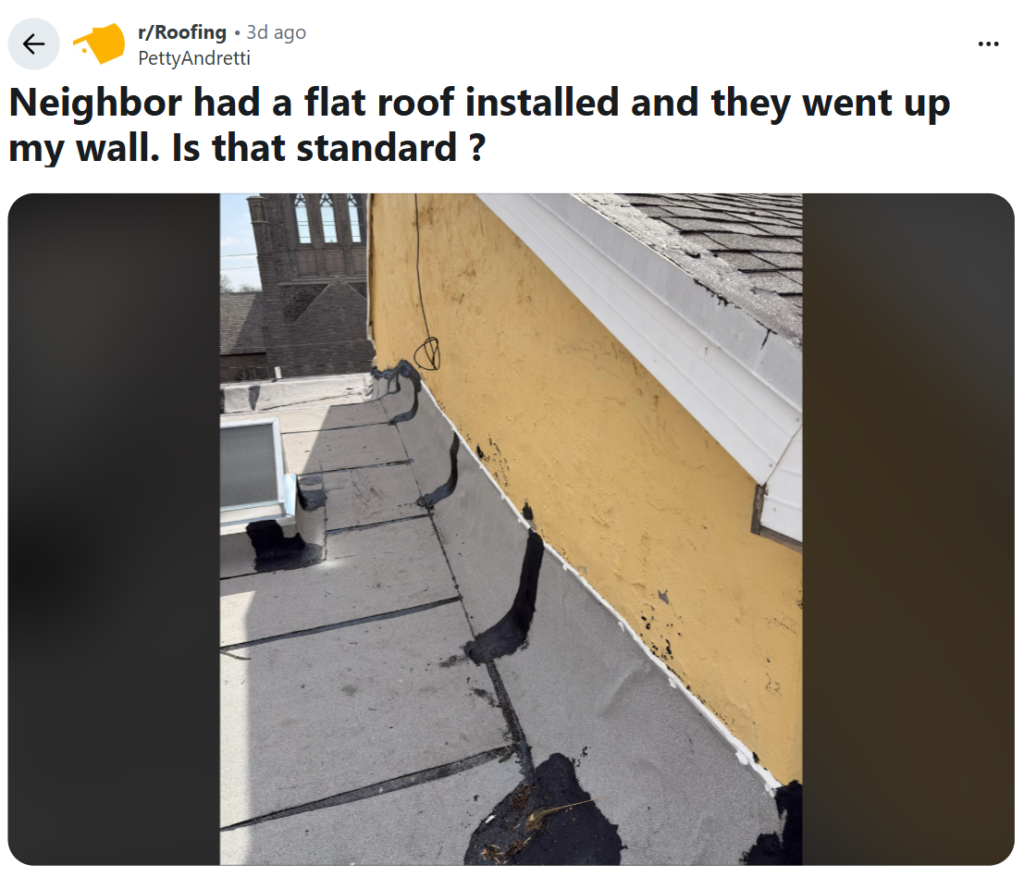
Not every roofing issue starts on your own property. Sometimes, the risk comes from how adjacent structures connect, especially in tightly spaced homes where one detail can affect two buildings.
This Reddit user shared a situation where a neighbor installed a flat roof and extended the roofing material up against their wall. The question was simple: is this standard practice?
At a glance, the setup might not look alarming. The membrane runs up vertically, and there appears to be sealant applied along the edge. But this type of detail sits in one of the most sensitive areas of any roofing system, the transition between a horizontal roof and a vertical wall.
In proper installations, this junction should include step flashing or counterflashing, designed to direct water away from the wall and prevent it from seeping behind the roofing material. It should also respect property boundaries and avoid relying solely on exposed sealants.
What stands out in this case:
- Heavy reliance on sealant, which tends to crack and fail over time
- Membrane termination without clear mechanical protection increases the chance of peeling or separation
- Water path risk, where rain can travel along the wall and find its way behind the system
According to Mr. Wilkins, “even if it holds in the short term, this kind of detail often leads to slow water intrusion. Moisture can work its way into the wall assembly, affecting insulation, interior finishes, and even structural components.”
This situation shows a different side of roof maintenance. Not all problems come from aging materials. Some start with installation choices that require closer monitoring from day one.
A proper inspection would determine whether this is a temporary fix, a code issue, or something that needs correction before it turns into a shared problem between properties.
A roof that “looked fine” after installation
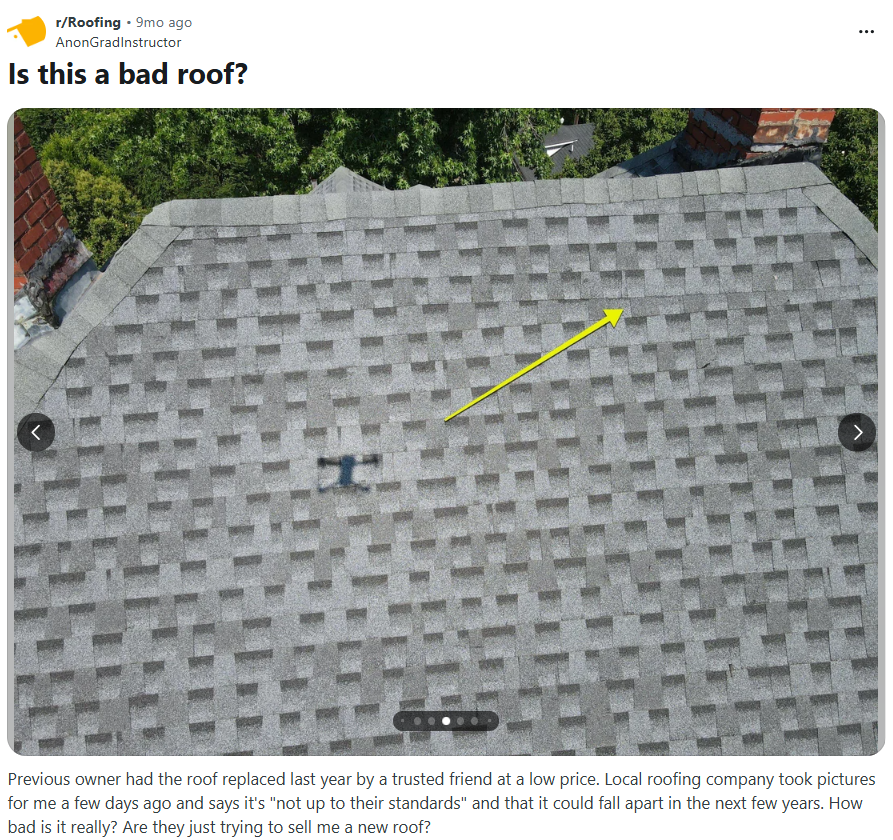
Now this is a situation that raises a different kind of concern. The roof is relatively new, installed just a year ago, yet a local roofing company flagged it as “not up to standard” and potentially at risk of early failure.
From the image, nothing immediately stands out to an untrained eye. The shingles appear uniform, and there are no obvious missing sections. That is exactly what makes cases like this difficult for homeowners to evaluate.
When a newer roof is questioned, the issue is often not the material itself, but how it was installed.
Some common underlying problems in these situations include:
- Improper nailing patterns, which can cause shingles to loosen over time
- Incorrect alignment, leading to uneven water flow across the surface
- Inadequate sealing makes the roof more vulnerable to wind lift
- Flashing details done incorrectly, especially around edges and penetrations
The concern mentioned that the roof could “fall apart in the next few years”, usually points to systemic installation issues rather than isolated defects. These are harder to spot without a close inspection because they affect how the entire system performs under stress, not just how it looks on a clear day.
This is where many homeowners hesitate. One contractor raises a red flag, and it is unclear whether the warning is valid or sales-driven.
“In a situation like this, the right move is not immediate replacement. It is verification. A second inspection, ideally from a roof maintenance company or independent inspector, can confirm whether the issue is cosmetic, localized, or widespread.” – Chad Wilkins.
This example highlights an important point. Roof maintenance is not only about aging roofs. Even newer systems benefit from early inspections, especially when the installation history is uncertain.
Catching installation flaws early can prevent premature failure and protect the investment that was just made!
How to properly care for a roof?
Good roof care is consistent and preventive. It focuses on keeping water moving off the roof, protecting vulnerable areas, and identifying wear before it spreads.
A practical approach includes:
- Keep gutters clear so water drains properly away from the roof
- Remove debris like leaves and branches that trap moisture
- Inspect flashing around chimneys, vents, and skylights
- Check shingles or panels for movement, cracks, or wear
- Monitor the attic for signs of moisture, heat buildup, or poor ventilation
- Address minor issues early, before they affect surrounding materials
Cleaning methods also matter. For example, using the wrong washing technique can damage shingles or remove protective granules. Many homeowners look into roof maintenance near me searches when they realize that proper care involves more than surface cleaning.
Working with a roof maintenance company can help identify issues that are not obvious, especially in areas like flashing, underlayment condition, or ventilation performance.
How often should roof maintenance be done?
Roof maintenance follows a schedule rather than a one-time task. Most homes benefit from two inspections per year, typically in spring and fall.
Additional checks are recommended after:
- Strong storms or high winds
- Heavy rainfall or hail
- Snow accumulation and thaw cycles
A basic roof maintenance checklist should be reviewed during each visit. This keeps small issues from carrying over into the next season.
Consistency has a direct impact on roof maintenance costs. Regular upkeep tends to spread out minor fixes over time, while skipped maintenance often leads to larger, more expensive repairs.
For homeowners comparing approaches, the difference usually comes down to timing. Maintenance done early costs less, takes less time, and helps the roof reach its intended lifespan.
FAQs
Is it better to pressure wash or soft wash a roof?
Soft washing is the safer and more appropriate method for most residential roofs. It uses low pressure combined with cleaning solutions to remove algae, moss, and dirt without damaging the surface.
Pressure washing, on the other hand, can strip granules from asphalt shingles, loosen materials, and force water underneath the roofing system. That can shorten the roof’s lifespan instead of extending it.
If cleaning is part of your roof maintenance checklist, the method matters as much as the frequency.
Can regular maintenance prevent roof leaks?
Regular maintenance significantly reduces the risk of leaks, but it does not make a roof immune to them.
Most leaks start from small, manageable issues such as cracked flashing, worn sealant, or displaced shingles. Routine inspections help catch these early, before water finds a path inside.
When maintenance is skipped, those minor vulnerabilities have time to develop into active leaks, often affecting insulation, decking, and interior spaces.
Is roof maintenance different from roof repair?
Yes, they serve different purposes.
- Roof maintenance focuses on prevention, inspections, and minor fixes
- Roof repair addresses existing damage, such as leaks, structural issues, or material failure
A consistent roof maintenance plan helps reduce the need for repairs, but it does not eliminate them. Over time, all roofing systems will require some level of repair due to aging and weather exposure.
Can I do roof maintenance myself?
Some basic tasks can be handled by homeowners, especially from the ground or with proper safety precautions.
Typical DIY-friendly tasks include:
- Cleaning gutters
- Removing visible debris
- Checking for obvious signs of damage
However, more detailed inspections and repairs are better handled by a roof maintenance company. Professionals can safely access the roof and identify less visible issues, such as early flashing failure or subtle moisture intrusion.
Safety is also a key factor. Roof work involves height, slope, and surface conditions that can become hazardous without the right equipment and experience.
What seasons are best for roof maintenance?
Spring and fall are the most practical times for routine maintenance.
- Spring helps assess any damage from winter conditions, including moisture and temperature changes
- Fall prepares the roof for colder weather by clearing debris and checking for vulnerabilities
Additional inspections after major weather events are also important. Storms, heavy rain, or strong winds can create damage that is not immediately visible but can worsen if left unaddressed.
Following a seasonal schedule keeps maintenance consistent and helps avoid unexpected issues throughout the year.
Stay Ahead with a Proactive Maintenance Plan
Roof maintenance comes down to timing and consistency. The earlier you catch small issues, the easier and less expensive they are to handle. When those same issues are delayed, they tend to spread into structural damage, interior problems, and higher repair costs.
Throughout this guide, you saw how routine care works in practice. Basic tasks like clearing gutters, checking flashing, and inspecting shingles help protect the entire roofing system. You also saw how quickly minor neglect can turn into real damage, especially when water finds its way beneath the surface.
A roof is built in layers, and each one depends on the others. When maintenance is consistent, those layers hold up as expected, and the roof reaches its intended lifespan. When it is skipped, even a well-installed system can fall short.
If you are unsure where your roof stands or what it needs next, getting clarity is the next step. Solve common questions and maintenance concerns!
A proactive roof maintenance plan is not about doing more work. It is about doing the right work at the right time, so your home stays protected year after year.