
The vast majority of roofers are honest, hard working people. But the roofing industry has been recognized for its disproportionate amount of scams.
According to the Better Business Bureau, 15% of all home improvement scam reports filed with them are roof-related. The Federal Trade Commission has noticed a dramatic increase in home improvement scams since the pandemic. And roofing scams remain a persistent leader in those numbers.
Now, the point of this article is not to scare you into a state of paranoia, instantly mistrusting every roofer you meet. Nor are we trying to persuade you that we’re the only roofing contractor you can trust in Virginia Beach.
The point of this article is to inform you so you can protect yourself from roofing scammers.
Your doorbell rings and you open it to find a roofer with a clip board standing on your porch. “Hey, we’re in the neighborhood working on one of your neighbor’s roofs. While we’re here, would you like a free roof inspection?”
Most people are naturally suspicious of door-knockers. You’ve probably already been warned about storm chasers. Ask them, “who’s roof are you working on?” Or see if they have out-of-state license plates on their vehicles. Maybe they are locals telling the truth. Maybe they’re not. But the best thing you can do when you spot a red flag is stop, think critically, and ask questions.
Red Flag 1: Exaggerating the scope
“Oh man, your roof’s dying! It’s a good thing we were in the neighborhood, just in time…”
How to avoid this scam: Thankfully, you can get multiple opinions and quotes from other roofing companies in Virginia Beach.
Red Flag 2: Vandalizing the roof
If they do get on your roof for an “inspection,” they might realize there isn’t enough damage to justify what they are trying to sell you. So some roof scammers in the past have purposely damaged roofs they were inspecting. We’ve heard stories of a scammer putting a metal ball in a sock and banging it across a roof to look like hail damage. They might manually rip shingles off. Or they might show you pictures of “your roof” looking terrible but in reality they are pictures from a different house.
How to avoid this scam: Ideally, you would only work with a roofing company in Virginia Beach you trust. So ask your friends and neighbors for roofers they trust.
But if you do let a suspicious roofer on your roof, try to watch them work. No need to hide, because if they know they’re being watched, they are less likely to try and vandalize your roof.

Red Flag 3: Saying they will pay the deductible
“You’ll pay my deductible, what a steal!”
In most insurance policies there is a stipulation: you are obligated, as the homeowner, to pay your own deductible. So these scammers are essentially asking you to commit insurance fraud. They think paying your deductible will close the deal on an expensive roof replacement. Since if the insurance company is paying for it, you’re more likely to accept.
But this kind of scam can cause your claim to be denied, even if the damage was legitimate. Some insurance companies have even denied renewals over this scam.
How to avoid this scam: If a roofer offers to pay your deductible, run away! That’s a bright red flag. Now, roofers can help you make a claim by providing evidence of damage. And some might be able to help you through the bureaucracy, but that’s about all we can do.
Red Flag 4: Free upgrades
“We’ll even replace your shingles with these upgraded, impact-resistant shingles for free.” Everything has a cost, and everything should be accounted for as a line item. So, if a roofer offers something for free like upgraded shingles, they will probably just give you standard shingles.
This can work the other way too. Charge you for the upgrade, but give you the standard shingle and pocket the difference.
How to avoid this scam: “The bitterness of poor quality remains long after the sweetness of low price is forgotten.” If they offer something for free, do your research, see how much it is worth. It can also help to get a second opinion from another roofer.
Red Flag 5: Insurance contingency
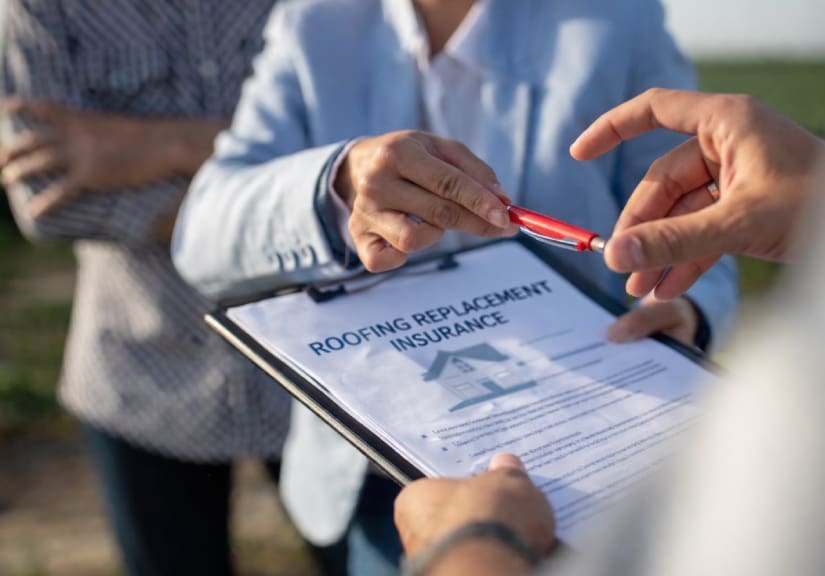
This is probably the most complicated scam here. Early on, before the roofer does any real work, they might ask you to sign something. They might ask you to sign before or right after an inspection but usually before an insurance adjuster comes to visit.
Some documents are legitimate, but look out for anything that says something like this:
“If your insurance company approves this as a claim and approves this for a repair or replacement then you are obligated to use our roofing company to do the work that your insurance company recommends.”
This is an insurance contingency and it locks customers into using that roofer. You might not realize this at the time. But when the roofers do a crappy job and you want to fire them, they can whip it out and threaten to sue you. Or threaten you with an expensive termination fee.
The threat of getting sued is enough to scare people into compliance. These documents are normally poorly written so they might not hold up to legal scrutiny. But even then, if your signature is on it, things get blurry. So don’t risk it. If this does happen to you, seek legal counsel. They will be able to analyze the document and give you real tangible advice.
How to avoid this scam: Read everything. Ask questions. A good roofer will take the time to explain the documents to you, even if it is just a simple roof repair from a mild Virginia Beach storm.
If they can’t answer a question, then a good roofer will say, “I’m not sure but a project manager at the office might know. Let me call them and ask them.” If they try to rush you, pressure you, or persuade you with today only prices, run away!
If you do spot or experience a scam, report it to the Federal Trade Commission.
Reporting scams can save others from the same experience. You can file a report online or call the FTC directly: 1-877-FTC-HELP, (1-877-382-4357). Stay safe out there!